A November 19 hearing will examine how Oregon guards assess public requests to see their credentials. The proposed changes are not in force.
When someone asks a working security guard to show a license, what makes the request reasonable? Oregon’s Department of Public Safety Standards and Training is seeking comments on a proposal intended to clarify that decision. A public hearing is scheduled for November 19.
What would change
The October 1 proposed-rule notice describes the existing requirement: providers must carry their DPSST credential or temporary permit while working. They must present it on demand to DPSST staff, law enforcement officers and Oregon Liquor and Cannabis Commission agents, and to other people on reasonable request.
The proposal responds to a petition about inconsistent interpretations. It would identify four considerations for evaluating public requests:
- The request’s connection to the security services being performed.
- Potential safety risks to people or the location.
- Interference with duties, including incident response.
- Conflict with the employer’s written work policies or instructions.
The official-demand requirement would remain. DPSST describes the aim as preserving public credential verification while recognizing operational responsibilities. Temporary-permit presentation provisions would also be aligned.
This is a proposed administrative-rule change, not an enacted law or permission to disregard current requirements. It remains listed on DPSST’s rulemaking page; no new effective date is reported here.
A useful conversation for supervisors now
GuardGuides analysis: A request for credentials can happen at a quiet reception desk or during an incident. Teams should be able to discuss both situations without assuming that every request is hostile, or that every request can be handled in exactly the same way.
A practical starting point is to ask the employer which current rule and written procedure govern the post. Who can answer an uncertain question during the shift? How should an officer explain a delay while attending to an immediate safety problem? Where should the circumstances be recorded if the encounter becomes an incident?
These questions belong in a briefing before a disagreement develops. A supervisor can walk through a hypothetical encounter, identify where staff need guidance and seek clarification from the regulator when the existing instructions are unclear. A proposal should not be copied into post orders as though it has already taken effect.
Keep observations separate from assumptions in any resulting report. Describe what was requested, the work underway, what was said and any supervisory guidance received. A person’s request to verify a credential, by itself, is not evidence of wrongdoing. The useful training question is how to respond professionally while meeting the rules that actually apply.
For broader practice weighing post orders and judgment, the paid 2026 Security Guard Scenario Bible presents 38 workplace scenarios with post-order responses, discretionary alternatives and takeaways. It is a general training resource, not an Oregon licensing guide or a substitute for current rules.
How to follow the hearing
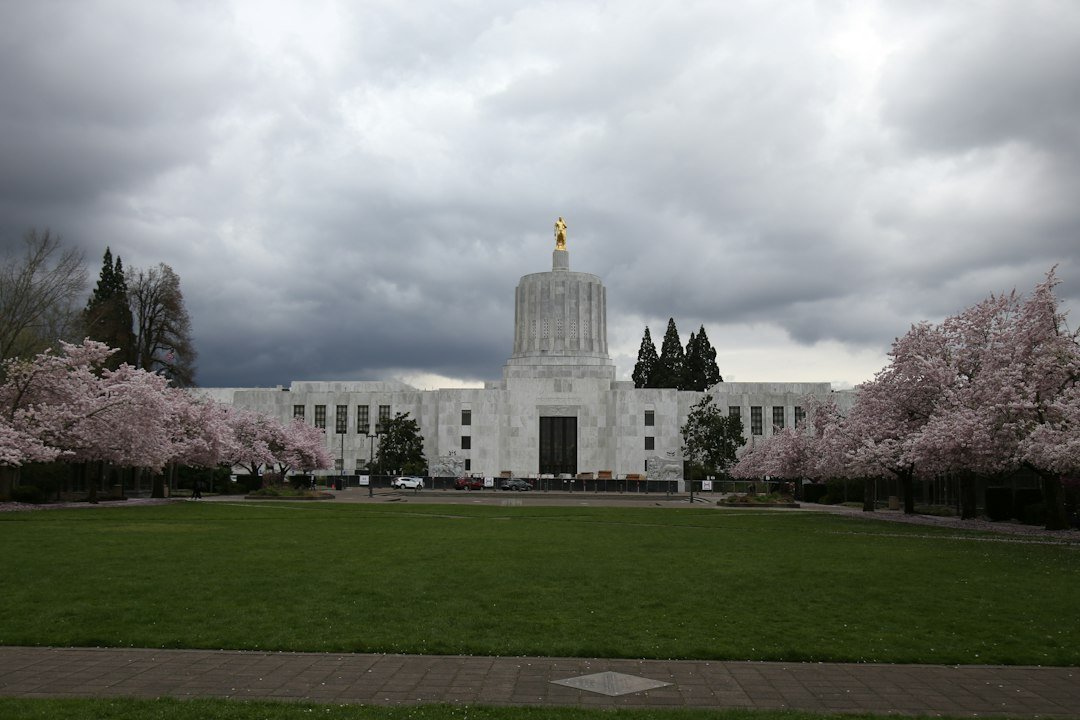
The November 19 hearing runs from 3 to 4 p.m. Oregon time at DPSST, Room A145, 4190 Aumsville Highway SE in Salem, with remote attendance available. The agency’s hearing announcement contains joining instructions and a contact for access questions. Written comments close November 23 at 5 p.m., according to the filed notice. Check the agency’s page for updates before attending or submitting comments.
Related reading: our de-escalation guide discusses communication during tense encounters. Our California safety-ambassador report examines a separate state’s questions about security roles and authority; Oregon’s proposal should not be applied to other states.
Source credits
Oregon DPSST proposed-rule notice filed October 1, 2026; DPSST November 19 hearing announcement; current DPSST rulemaking index. Links appear above. Checked November 13, 2026. Reporting is based on public agency records; practical discussion is GuardGuides analysis. No interviews or eyewitness reporting are claimed.